
We’re all in Defense Tech now…
Over the last three months I have attended three different Israel events focused on defense, Aerospace and cyber security industries. The prevailing theme amongst them all is: we're all in defense now. Maybe this is because of the times that we're in, or maybe it's because of what we've just been through with Operation Iron Swords. So let me describe what's changed since October 7th 2003 and today.
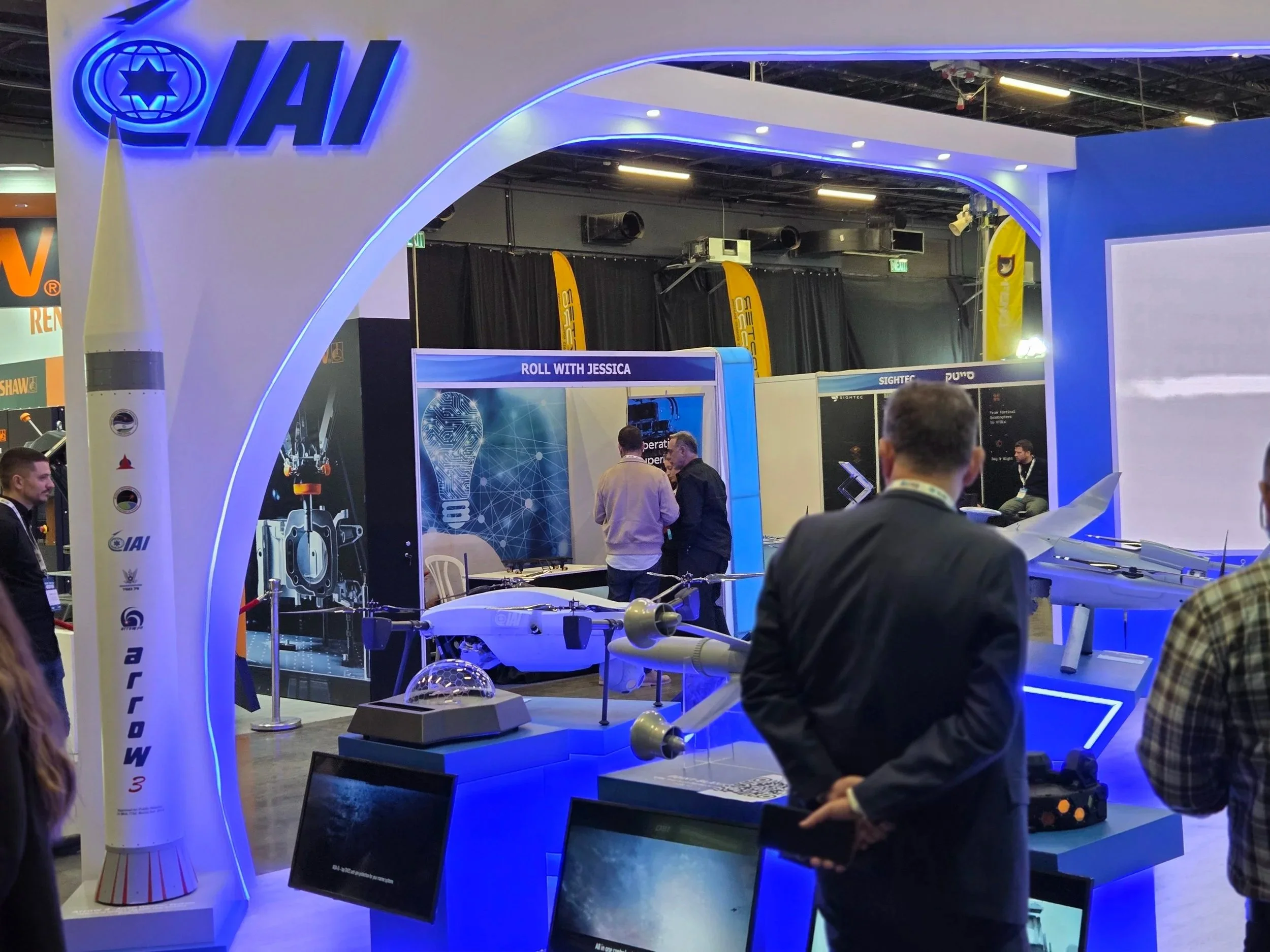
IAI’s display of it’s drone technologies
In the beginning..
On December 25th 2003 I was sitting on the 61st floor of the Israeli Sarona Tower overlooking the Tel Aviv landscape and talking to some friends of mine who would just come back from reserve duty. Now these weren't ordinary reservists, they were involved in the infrastructure, logistics and planning related to the country’s largest mobilization of the reserve force since the Yom Kippur War and, as business consultants, they're deeply embedded in the technology landscape found throughout Israel. So these friends understood the capabilities of both the Israel Defense Forces and the technologists. I said “ I guess we're all in defense Tech now” and they shrugged and said “ you're right” , like it was just another day. but I knew it wasn't and thought about how I could help my adopted country become a better place for everyone.
About a year later I joined my now partners, Oded Orgil and Mark Goodman, on the journey that is now I3 Capital. I stated at the time that we should focus on Industries that mattered to the country and technologies that could change the world, accordingly, one of those Industries that we targeted were those related to Defense and Aerospace. What I didn't realize at that moment is how important this focus would be for my personal journey.
So with new marching orders to learn as much as I could about the Israeli defense and Aerospace Industries I turned to a number of experts and investors. I was introduced to some very interesting operators at companies that were doing great things and building great solutions and investors who, like me, or just beginning the creation of a Defense Tech ecosystem.
At that time most of the operators I spoke with were transitioning from other Industries (like Agtech or IoT Sensors) or providing service solutions to Israel's existing Prime defense contractors ( Elbit systems, Raphael systems, Israel Aerospace Industries). They were now building products that would serve real battlefield operators.
At the same time, my conversations with institutional investors (mostly venture capitalists) about the types of companies that they were looking to deploy capital towards were also accelerating as there were increasingly more of them by the month. At that time, most described the profile of the ideal investee company was a founder/firm that had already been operating in the defense area and had received material contracts from both the Israeli Defense Forces and the US Department of Defense (now War) to further scale and commercialize their operations.
I found this curious because the companies that I had been meeting were very early stage, and at that time there were no later stage companies with commercial applications operating in the battlefield. and I knew that these investors were likely speaking to the same companies that I had been meeting. Nevertheless a number of companies were able to transition their core technologies from a standard commercial operation to a defense application (ie Exodigo and Xtend) which made them more attractive to these investors. I call this dichotomy, the “barbell economy” : lots of early stage companies with great ideas, a bit of capital, a POC and a few companies with clear commercialization opportunities that can be quickly transitioned to Battlefield tactics and usage.
“The Barbell Economy is also found in the Defense Industry”
While at the Defense Tech Conference this week in Tel Aviv, I found myself staring directly at the barbell economy. When you wandered around the exhibition hall, 2/3 of the companies were more of an early stage and 1/3 of companies that clearly had products and solutions Ready for Market. What was even more interesting was the number of financial investors present and actively available for conversation (from 1 or 2 to at least a 12) and the number of delegates from Africa and Southeast Asia (I estimate at least 20% of all delegates) were significantly more than I had seen any other defense conference in the last 18 months.
And the applications that each of these companies provided were solving unique problems in the battlefield, those that were Israeli focused had clearly had Battlefield experience to draw upon. I found at least 10 different drone companies each of whom had a specific purpose, whether it was delivering medical supplies, munitions or communication equipment to the battlefield on a real-time basis or those in a more traditional reconnaissance format. There were also a number of software companies providing operating systems, cyber Security Solutions, Logistics Management Solutions, and even one that was focused on recognizing and mitigating the disinformation found in today's online environment.
One other observation that I have from the conversations with investors is that we're no longer talking about commercialization applications, they are seeking and funding Battlefield tested solutions and with the logistics to deliver those solutions to the battlefield. Whereas, in the recent past, investors were talked about how to deliver solutions to the Tier 1 prime suppliers, they are now more interested in how companies create a direct connection to the procurement departments at Defense Departments in Europe (mostly Germany), North America, and specific African/Asian countries.
Final thoughts:
So after 18 months of active discussions with many individuals and review of this past week, my takeaway from this year's defense Tech conference is that the barbell economy still exists, but the heavy end of the barbell comprising more “proven” companies is a bit heavier than it was 18 months ago. and that bodes well for both our own defense and those of our neighbors and allies.
